K-23 / JM-23 · ASTM C155 Group 23 · 1260 °C
K-23 Insulating Refractory Bricks
Supplier and exporter from Rajkot, India. Entry IFB grade — the standard choice for hot-face insulation up to 1260 °C and back-up insulation behind dense refractory bricks.
- Max temp1260 °C
- Bulk density0.45 – 0.50 g/cm³
- CCS≥ 1.0 MPa
- Thermal conductivity≈ 0.15 W/m·K
- Standard size230 × 114 × 65 mm
- MOQ3 – 5 MT
About this product
What K-23 insulating fire bricks are — and where they fit
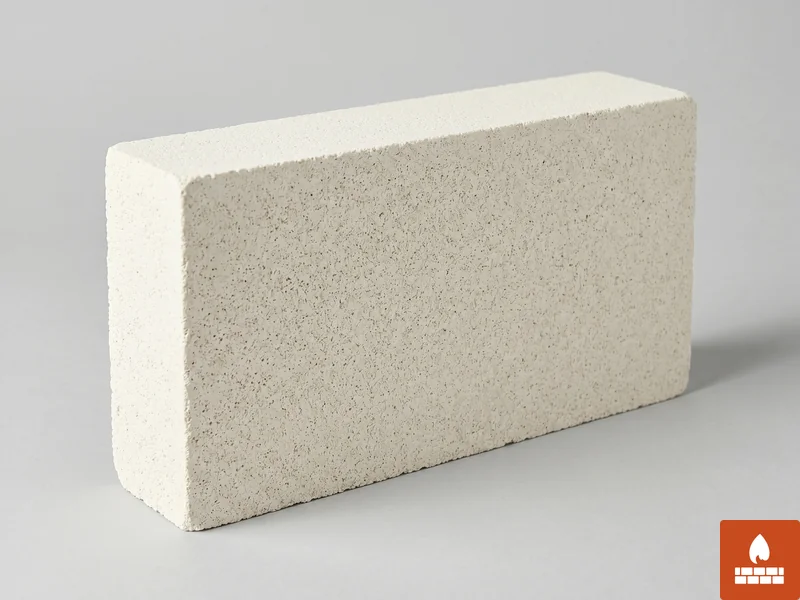
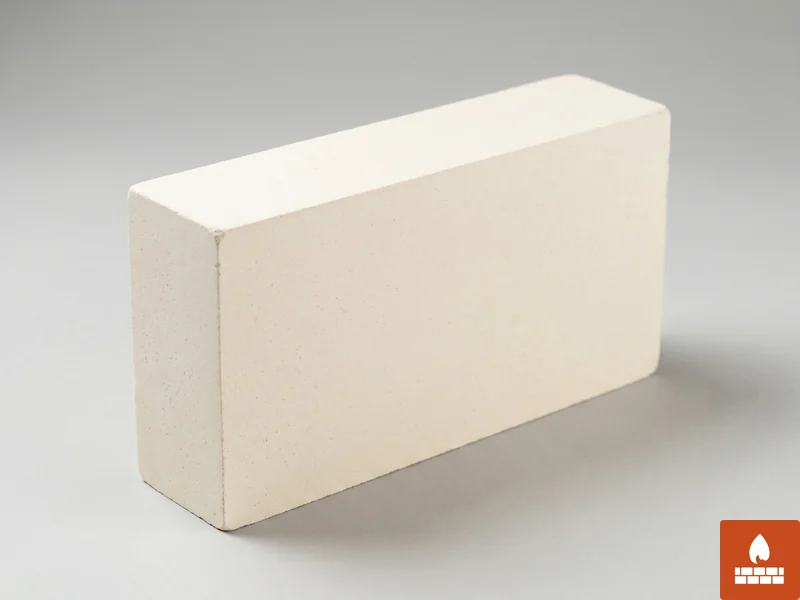
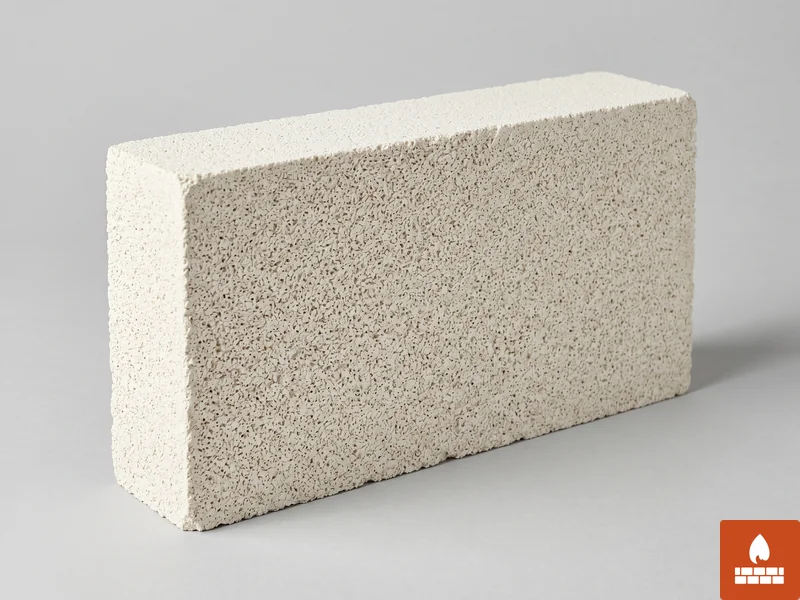
K-23 insulating fire bricks (also marketed as JM-23) are lightweight porous refractory bricks classified ASTM C155 Group 23 — the lowest temperature class in the IFB family. They are manufactured from selected refractory clays and high-purity alumina, bonded with combustible burn-out additions that leave behind a controlled pore structure after firing. The result is a brick with bulk density of 0.45 – 0.50 g/cm³, approximately 75% porosity, and a thermal conductivity of about 0.15 W/m·K at 800 °C — roughly one-fifth the conductivity of a dense fireclay refractory.
What is K-23? K-23 is the ASTM-classified entry grade of insulating refractory bricks rated for continuous hot-face service up to 1260 °C (2300 °F). The "K" prefix is the historic Babcock & Wilcox / Morgan trade-mark adopted as a de-facto industry classification; the number indicates the maximum service temperature in hundreds of degrees Fahrenheit (K-23 = 2300 °F). The grade exists because most heat-treatment, ceramic, glass-annealing and laboratory-scale equipment never operates above 1200 °C, and at those temperatures K-23 delivers the lowest installed heat-loss per dollar of any refractory brick.
K-23 is regularly specified as a hot-face brick in clean, non-corrosive atmospheres — ceramic tunnel kilns, lab muffle furnaces, glass annealing lehrs — and as a back-up insulation layer behind dense high-alumina bricks or fire-clay bricks in higher-temperature equipment where the wall thickness needs to be kept compact and the cold-face temperature low. The brick is easily machined with standard masonry tools, which makes on-site shape adjustments practical for repair work and small-batch kilns.
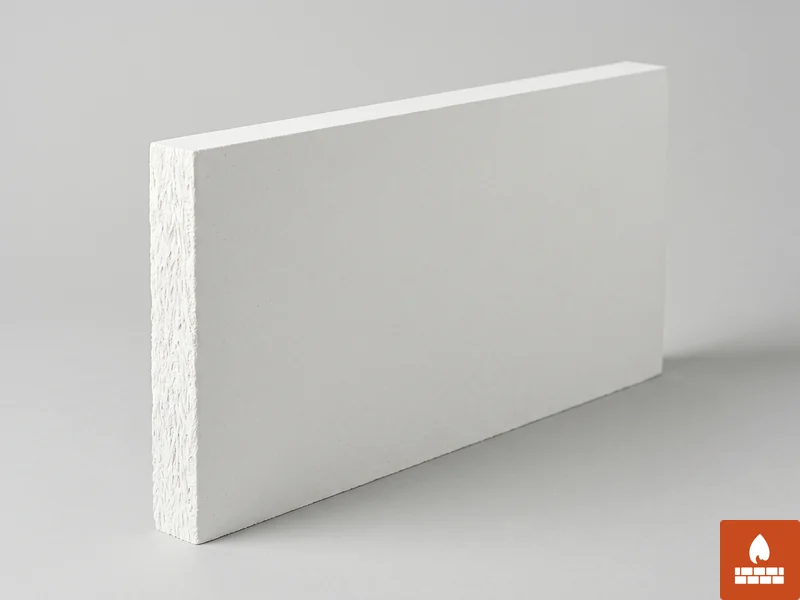
firebrickssource.com supplies K-23 in the standard 230 × 114 × 65 mm size, plus arches, wedges, splits and machined shapes to drawing. The brick is normally packed shrink-wrapped on heat-treated wooden pallets, edge-protected, with corner boards — IFB chips easily and packaging discipline is part of the export specification. The grade is exported regularly to ceramics manufacturers in Southeast Asia, glass-works in the Middle East, and laboratory-equipment OEMs in Europe. For the next step up in temperature, see K-26 IFB.
Technical specifications
Full property data — K-23 IFB
| Property | Value | Test method |
|---|---|---|
| Classification | ASTM C155 Group 23 | ASTM C155 |
| Max service temperature | 1260 °C (2300 °F) | ASTM C155 |
| Bulk density | 0.45 – 0.50 g/cm³ | ASTM C134 / IS 1528-12 |
| Cold crushing strength (CCS) | ≥ 1.0 MPa | ASTM C133 / IS 1528-4 |
| Modulus of rupture (MOR) | ≥ 1.0 MPa | ASTM C93 |
| Apparent porosity | ≥ 75 % | ASTM C20 / IS 1528-8 |
| Thermal conductivity at 800 °C | ≈ 0.15 W/m·K | ASTM C182 |
| Permanent linear change at 1230 °C × 24 h | ≤ −1.0 % | ASTM C210 |
| Al₂O₃ content | ≈ 37 % | IS 1528-7 |
| Standard size | 230 × 114 × 65 mm | — |
| Custom sizes | Available on request — arches, wedges, splits, machined shapes | — |
*Typical certified values — actual batch values issued on the per-shipment test certificate. Values aligned with IS 1528 / ASTM C-series / EN 993 test methods.
Applications
Where to use K-23 insulating bricks
- Kiln car hot-face insulation (ceramic tunnel kilns)
- Ceramic kiln roof and side walls
- Laboratory and pilot-scale furnace lining
- Heat-treatment furnace back-up insulation
- Glass annealing lehr lining
- Pottery and studio kiln linings
- Low-temperature oven and dryer lining
- Lid and door insulation for industrial ovens
- Back-up behind dense fireclay or high-alumina hot-face
- Crematorium and incinerator back-up lining
Datasheet
Download technical datasheet
PDF with all certified properties, dimensional tolerances and applicable ASTM / IS test methods. Use this for tender attachments and procurement files.
Download K-23 datasheet (PDF)Quote request
Get K-23 quote in 24 hours
Quantity, shape mix, Incoterm — that's all we need. Quote, datasheet and lead time come back the same business day or the next.
Frequently asked
K-23 — questions buyers ask
What is the maximum service temperature for K-23 IFB?
K-23 insulating fire bricks are classified ASTM C155 Group 23 and are rated for hot-face service up to 1260 °C (2300 °F). Continuous-service ratings should always reference the test certificate values and actual cycling conditions.
What is the difference between K-23 and dense fireclay bricks?
K-23 IFB has bulk density around 0.45 – 0.50 g/cm³ (versus ~2.0 g/cm³ for dense fireclay), low thermal conductivity (~0.15 W/m·K at 800 °C) and is designed as an insulating refractory. Dense fireclay is structural hot-face refractory. The two are usually used together — dense brick at hot-face, K-23 behind for back-up insulation.
Where are K-23 insulating refractory bricks used?
Typical applications include kiln car hot-face insulation, ceramic kiln roof and wall, laboratory furnaces, back-up insulation behind dense refractory in heat-treatment furnaces, and lid insulation for low-temperature ovens.
What is the standard size of K-23 IFB?
Standard size is 230 × 114 × 65 mm (9 × 4½ × 2½ inches). Arches, wedges, splits and machined shapes are available on request — IFB is easy to machine to drawing.
Can K-23 be used as a hot-face brick?
Yes, K-23 is regularly specified as a hot-face brick in non-corrosive environments up to 1260 °C — typical for ceramic kilns and laboratory furnaces. For environments with abrasion, slag, dust or chemical attack, use a dense hot-face refractory and place K-23 as the back-up layer.
What is the typical MOQ and packaging?
Standard MOQ is 3 – 5 MT for stocked sizes. IFB is shrink-wrapped on heat-treated wooden pallets, edge-protected, with corner boards. One 20-foot container typically loads 8 – 12 MT of K-23 IFB depending on shape mix.
Do you provide samples and test certificates?
Yes. Samples can be dispatched on request — normally chargeable plus courier. Every production batch is tested for bulk density, cold crushing strength, permanent linear change and thermal conductivity (lot basis); a test certificate ships with the consignment.
Related products