Precast · LCC / ULCC · Any base
Custom Precast Refractory Shapes
Engineered-to-drawing refractory pieces — low-cement (LCC) or ultra-low-cement (ULCC) castable, vibration cast in steel moulds, fired or chemically bonded. Any base chemistry, 5 kg to 5 tonnes per piece.
- FormLCC / ULCC castable
- ProcessVibration cast in steel moulds
- BondingFired or chemically bonded
- BaseHA / SiC / Mullite / MgO-Sp
- Weight5 kg – 5 tonnes
- Lead time6 – 12 weeks
About this product
What custom precast refractory shapes are — and where they fit
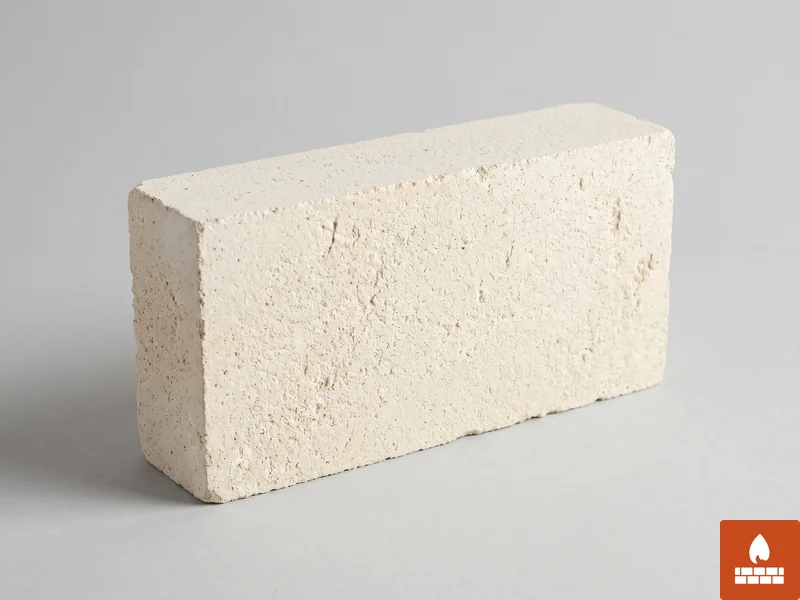
Custom precast refractory shapes are engineered refractory components cast in steel moulds at the manufacturing plant rather than installed as monolithic castable on-site. firebrickssource.com — Rajkot, Gujarat, India — produces custom precast refractory shapes to customer drawings as part of the special shapes refractory category, exported to project rebuilders, OEM equipment makers and end-user plant teams worldwide.
Custom precast refractory is the route where the lining requires a specific engineered shape too complex for pressed brick, too large for hand-rammed sleeve, or too critical to risk on-site dry-out and installation variation. The piece is cast from a low-cement (LCC) or ultra-low-cement (ULCC) castable, vibration-cast into a steel mould, cured under cover for 24 – 48 hours, then either fired in a tunnel kiln to develop ceramic bonding (for fired-bond products) or chemically bonded at lower temperature (for chemical-bonded products). The result is a piece with controlled fired properties, no field dry-out risk, and dimensional accuracy that allows tight installation in fast-rebuild schedules.
Base chemistry is selected to match the duty. Any base used elsewhere in our refractory portfolio can be reformulated as precast: high-alumina precast for cement-kiln and steel-reheating refractory shapes; silicon-carbide precast for biomass-boiler and aluminium-furnace duty; mullite precast for thermal-shock service; magnesia-spinel precast for cement-burning-zone and steel-ladle service. The brick portfolio sets the chemistry library; precast adds the geometry freedom.
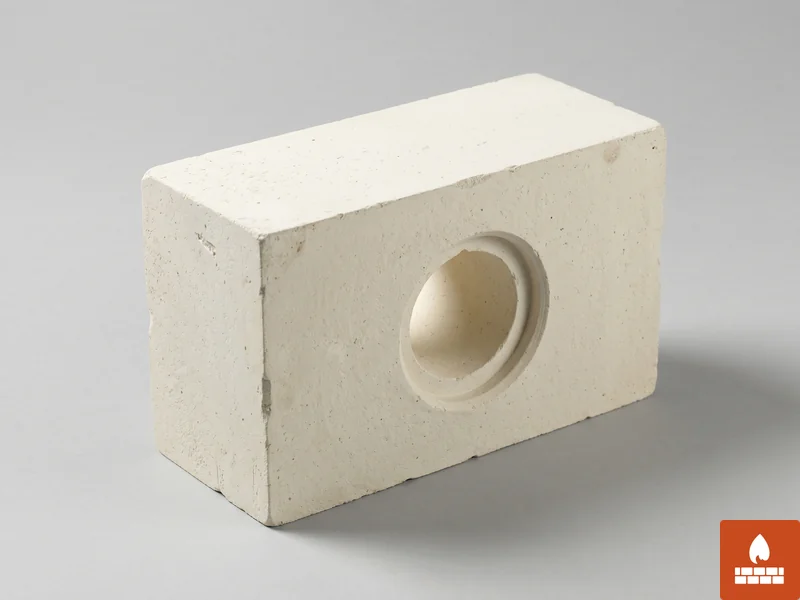
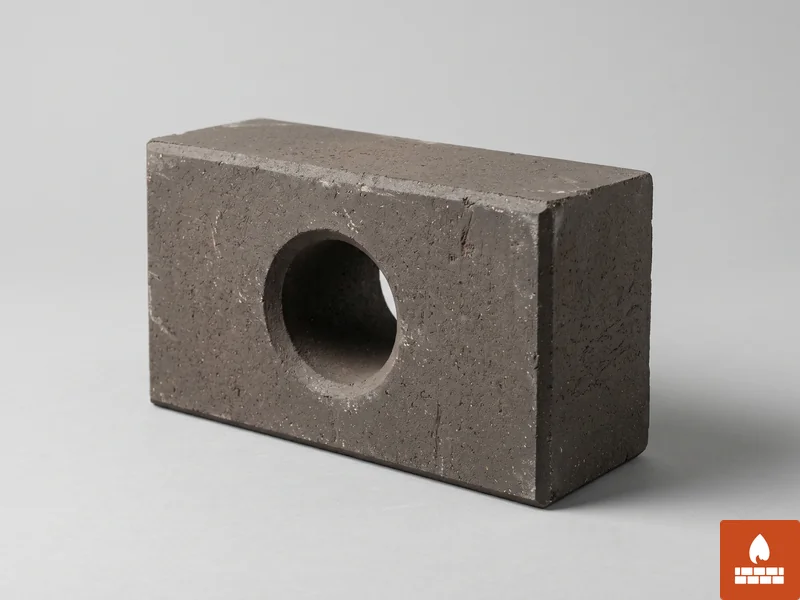
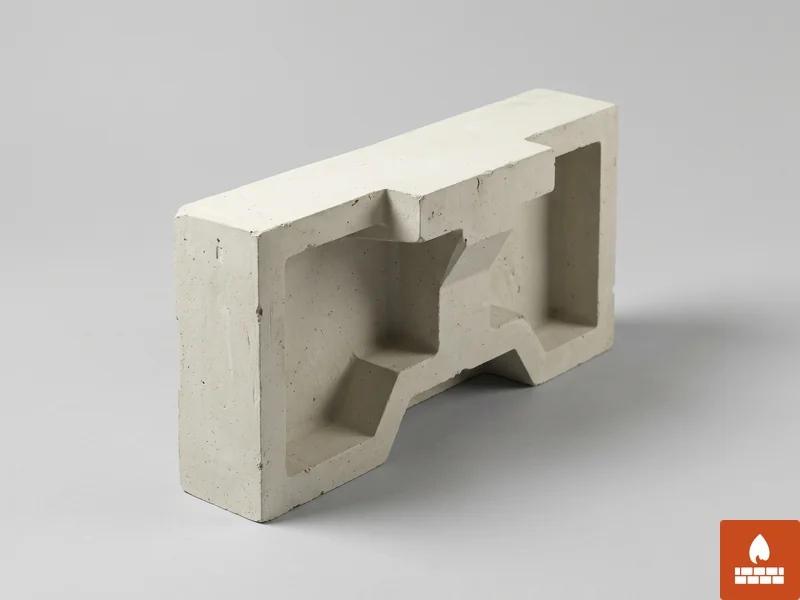
Each of our refractory categories can be supplied as engineered precast shape — that is the point of custom precast. Browse fire bricks for the fireclay precast base chemistry, high-alumina bricks for the most-common precast alumina base, insulating fire bricks for back-up precast modules, basic refractories for magnesia and MgO-spinel precast, acid-resistant bricks for acidic-service precast in zircon or SiC, and specialty refractories for premium AZS or corundum precast pieces. Within special shapes, common precast forms include the burner blocks, tap-hole assemblies, checker bricks and arch / wedge shapes already documented.
firebrickssource.com supports the precast process end-to-end: customer drawing review → steel mould design → mix design → casting → covered curing → controlled firing or chemical setting → dimensional QC and test certificate. Typical weight range is 5 kg to 5 tonnes per piece; common forms include lintels, anchor bricks, port-neck inserts, hearth pads, flue dampers and reformer tube supports.
Process & specifications
Custom precast refractory — process & common forms
| Step | Detail | Typical duration |
|---|---|---|
| 1. Drawing review | Customer DWG / PDF reviewed by refractory engineer | 1 – 2 days |
| 2. Mould design | Steel mould engineered for vibration casting | 1 – 2 weeks |
| 3. Mix design | LCC / ULCC castable in chosen base chemistry | 3 – 5 days |
| 4. Vibration casting | Cast into mould with vibration consolidation | 1 day per piece |
| 5. Curing | Covered cure at controlled temperature/humidity | 24 – 48 h |
| 6. Firing or chemical bonding | Tunnel kiln fire (fired bond) or set at low T (chemical bond) | 3 – 7 days |
| 7. Dimensional QC | Per drawing tolerances + test certificate | 1 – 2 days |
| Common forms | Lintels · Anchor bricks · Port-neck inserts · Hearth pads · Flue dampers · Reformer tube supports · Burner blocks · Hopper liners | |
| Weight range | 5 kg to 5 tonnes per piece (larger by project) | |
| Base chemistries | High-alumina · Silicon-Carbide · Mullite · Magnesia-spinel · Zircon (per duty) | |
*Typical certified values — actual batch values issued on the per-shipment test certificate. Values aligned with IS 1528 / ASTM C-series / EN 993 test methods.*
Applications
Where to use custom precast refractory shapes
- Industrial-kiln door lintels
- Refractory anchor bricks for hung linings
- Glass-tank port-neck inserts
- Furnace hearth pads
- Boiler & kiln flue dampers
- Petrochemical reformer tube supports
- Engineered burner blocks
- Hopper & chute liners
- Sulphur-recovery thermal reactor inserts
- Specialty incinerator / waste-power refractory
Precast across our refractory range
Any of our refractory categories can be made as precast shape
Send a drawing for a precast-shape version of any base chemistry in our refractory portfolio. Each of the six categories below can be precast-shape made:
Fire Bricks
Fireclay precast — general-purpose furnace shapes up to 1350 °C.
High-Alumina Bricks
HA-60 to HA-90 precast — cement kiln, steel reheating, ladle shapes.
Insulating Fire Bricks
IFB precast — back-up insulation modules, hot-face lightweight shapes.
Basic Refractories
Magnesia and magnesia-spinel precast for cement-burning zone and ladle.
Acid-Resistant Bricks
High-silica, zircon, SiC precast — chemical-plant and FGD shapes.
Specialty Refractories
Premium corundum and AZS precast for glass tanks and EAF.
Datasheet
Download technical datasheet
PDF with the full precast process, base-chemistry options, common forms and dimensional tolerances. Includes drawing-package template for fastest quotation.
Download PCR datasheet (PDF)Quote request
Send drawing — quote in 24 hours
Email your DWG / PDF with operating conditions and quantity. We engineer the mould, propose a base chemistry and quote within 24 business hours.
Frequently asked
Custom precast — questions buyers ask
What is a custom precast refractory shape?
A custom precast refractory shape is an engineered refractory component cast in a steel mould to the customer's drawing — rather than installed as a monolithic castable on-site. The piece is cast, cured and fired (or chemically bonded) at the manufacturing plant, then shipped ready for installation. This eliminates on-site curing time, reduces dry-out risk and gives more consistent properties than field-installed castable.
What is the manufacturing process?
The standard process is: (1) customer drawing review and engineering, (2) steel mould design and fabrication, (3) mix design for the chosen base chemistry, (4) vibration casting of LCC or ULCC castable, (5) covered curing for 24 – 48 hours, (6) controlled firing if specified or chemical bonding if room-temperature set, (7) dimensional QC and test certificate. Lead time is typically 6 – 12 weeks depending on shape complexity and tonnage.
What base chemistries are available?
Any common refractory base — high-alumina (45 – 90% Al₂O₃), silicon-carbide SiC, mullite, magnesia-spinel and zircon. The base is selected by service temperature, slag chemistry and abrasion duty. We provide engineering advice on the right base for your application.
What weight and size of shape can you produce?
Typical weight range is 5 kg to 5 tonnes per piece. Pieces larger than 5 tonnes are possible on a project basis with split-mould design. Smaller shapes below 5 kg are usually more economical as pressed brick rather than precast.
What are common precast forms?
Common precast forms include lintels (door / window arches in industrial kilns), anchor bricks (refractory anchors for hung linings), port-neck inserts (glass tank ports), hearth pads (furnace floor panels), flue dampers (boiler / kiln dampers), reformer tube supports (petrochemical), burner blocks (in matching geometry to OEM) and many other engineered shapes.
Why precast versus on-site castable?
Precast shapes eliminate the construction-site dry-out cycle, give controlled fired properties, reduce installation time, and allow quality control at the manufacturing stage. On-site castable is preferred for irregular linings, very large monolithic structures and tight site logistics. Many projects use a mix of both — engineered precast for repeatable shapes plus on-site castable for irregular zones.
Do you provide samples and test certificates?
Yes. For engineered precast shapes a first-article inspection sample can be supplied before bulk production. Every shape ships with a test certificate covering bulk density, apparent porosity, CCS and (where specified) hot MOR per IS 1528 / ASTM C-series.
Related products