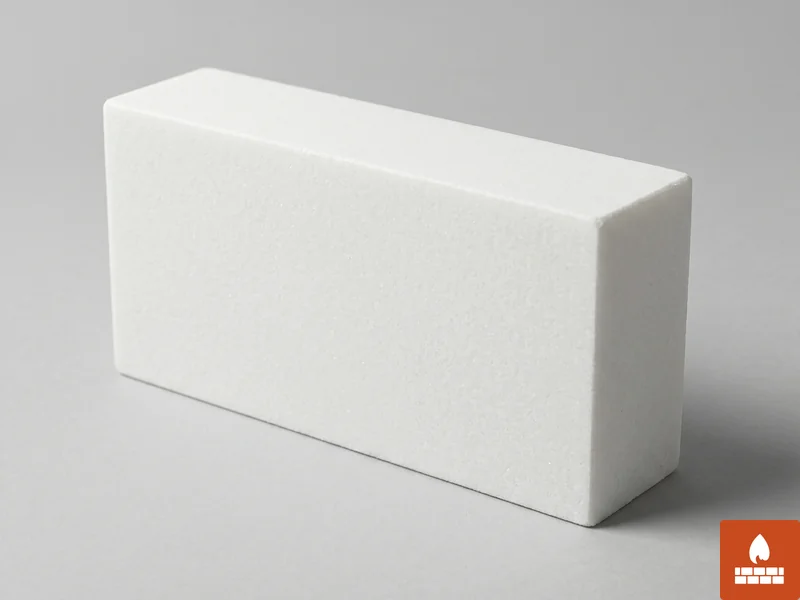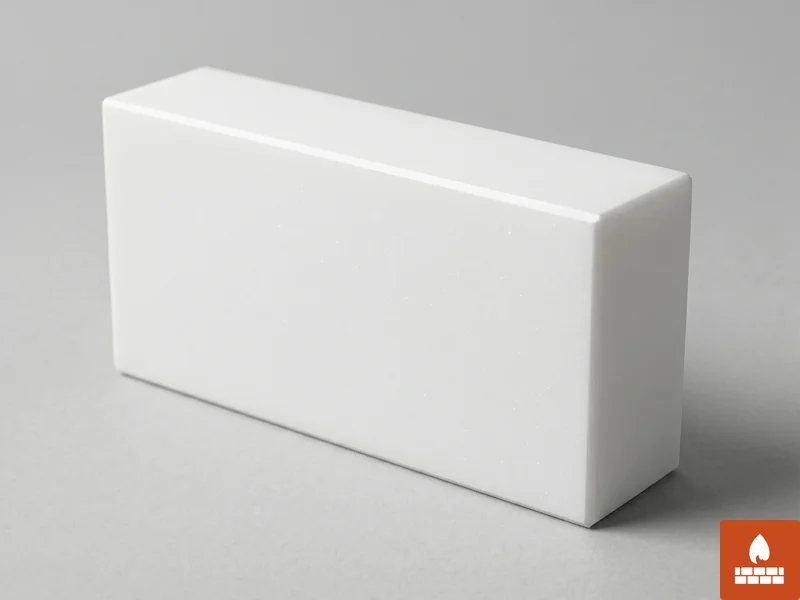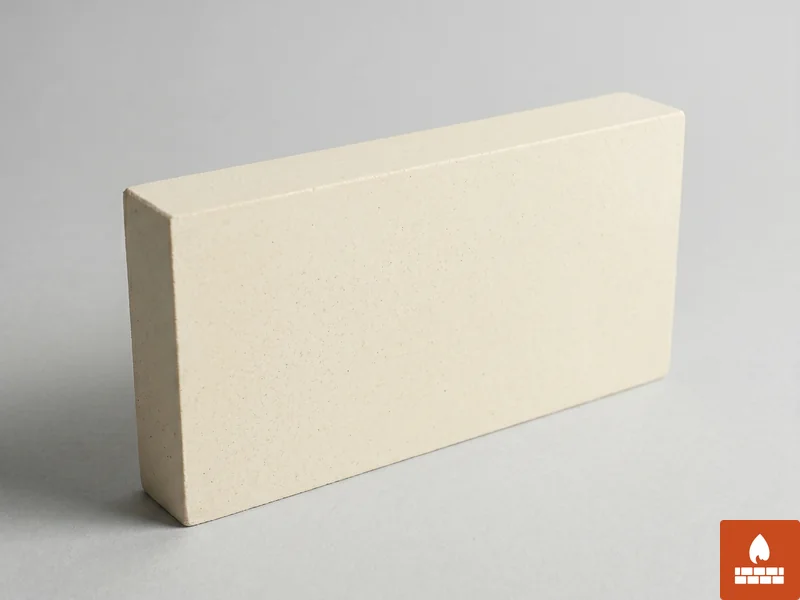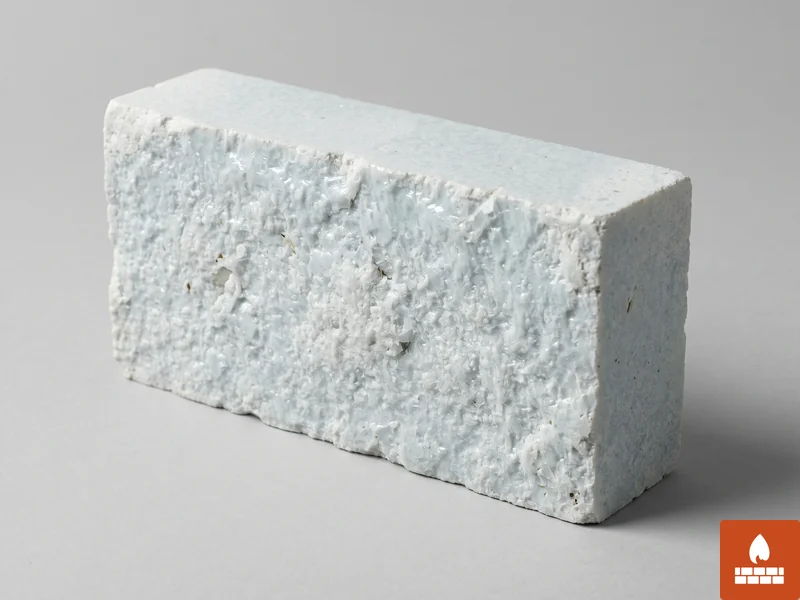
AZS-33 · 36 · 41 · 1700 °C
Fused-Cast AZS Refractory Bricks
Premium glass-tank refractory bricks — electric-arc melted, cast in moulds, annealed under controlled cooling. AZS-33, AZS-36 and AZS-41 grades for primary glass-tank flux line, throat, port neck and dog house.
- Al₂O₃47 – 50%
- ZrO₂32 – 41%
- App. porosity≤ 1.5%
- Bulk density≥ 3.65 g/cm³
- CCS≥ 300 MPa
- Max temp1700 °C
About this product
What fused-cast AZS refractory bricks are — and where they fit
Fused-cast AZS refractory bricks are premium specialty refractories produced by electric-arc melting of Al₂O₃, ZrO₂ and SiO₂ raw materials, casting into preformed moulds and slow-cooling under controlled annealing. firebrickssource.com — Rajkot, Gujarat, India — supplies AZS-33, AZS-36 and AZS-41 grades within the specialty refractories range, exported to glass-tank constructors and rebuild contractors worldwide.
Fused-cast AZS bricks are the global standard refractory for glass-tank hot zones. The manufacturing route is fundamentally different from pressed/sintered refractory bricks: raw materials are melted at around 2000 °C in an electric arc furnace, cast into graphite or sand moulds, and then annealed for several days. The resulting brick has near-zero open porosity (≤ 1.5%), bulk density ≥ 3.65 g/cm³ and cold crushing strength typically above 300 MPa — an order of magnitude tougher than any pressed refractory. The dense interlocked crystal structure of corundum and baddeleyite (ZrO₂) phases is what gives the brick its decisive resistance to molten-glass corrosion over a 8 – 12 year tank campaign.
Three grades are standard: AZS-33 (33% ZrO₂) for less aggressive glass-tank zones and back-up positions; AZS-36 (36% ZrO₂) as the workhorse primary flux-line grade; and AZS-41 (41% ZrO₂) for the most aggressive throats and flux lines in container, float and fibre-glass tanks. Variants are produced as Normal Void (NV), Tight Void (TV) and Void-Free (VF) — referring to the residual cavity that forms inside the brick during cooling. VF blocks are used in the most critical positions.
Note the manufacturing distinction — fused-cast AZS is electric-arc melted, not pressed. The category sits inside specialty refractories and is supplied alongside premium corundum bricks for tank crowns and zirconia bricks for ultra-high-T positions. For glass-tank back-up specify zircon bricks or high-alumina bricks behind the AZS hot face.
Technical specifications
Full property data — fused-cast AZS bricks
| Property | AZS-33 | AZS-36 | AZS-41 | Test method |
|---|---|---|---|---|
| Al₂O₃ content | ≈ 50 % | ≈ 49 % | ≈ 47 % | XRF |
| ZrO₂ content | ≥ 33 % | ≥ 36 % | ≥ 41 % | XRF |
| SiO₂ content | ≈ 16 % | ≈ 15 % | ≈ 13 % | XRF |
| Apparent porosity (closed) | ≤ 1.5 % | ≤ 1.2 % | ≤ 1.0 % | EN 993-1 |
| Bulk density | ≥ 3.65 g/cm³ | ≥ 3.75 g/cm³ | ≥ 3.95 g/cm³ | EN 993-1 |
| Cold crushing strength (CCS) | ≥ 300 MPa | ≥ 320 MPa | ≥ 350 MPa | ASTM C133 |
| Maximum service temperature | 1700 °C | — | ||
| Casting variants | NV (Normal Void) · TV (Tight Void) · VF (Void-Free) | — | ||
| Sizing | To customer drawing — flux-line block, throat block, port-neck block | — | ||
*Typical certified values — actual batch values issued on the per-shipment test certificate. Values aligned with IS 1528 / ASTM C-series / EN 993 test methods.*
Applications
Where to use fused-cast AZS bricks
- Glass-tank flux line (side-wall hot face)
- Glass-tank throat blocks
- Port-neck blocks (regenerator-melter)
- Doghouse blocks (batch charging zone)
- Bottom paving (severe-corrosion tanks)
- Tweel & canal blocks
- Float-glass tin-bath refractory roof
- Container-glass forehearth
- Fibre-glass tank bushing back-up
- Specialty & LCD-glass tank construction
Datasheet
Download technical datasheet
PDF with AZS-33 / AZS-36 / AZS-41 property tables, casting variants (NV/TV/VF) and dimensional tolerances. Use for tank specification packages.
Download AZS datasheet (PDF)Quote request
Engineered quote on AZS
Send the glass type, tank capacity (TPD), drawing or position list, and Incoterm. AZS quotes are engineering-supported with lining design review.
Frequently asked
AZS — questions buyers ask
What does AZS stand for?
AZS stands for Al₂O₃-ZrO₂-SiO₂ — the three principal oxides in the brick chemistry. Typical composition: Al₂O₃ 47 – 50%, ZrO₂ 32 – 41% and SiO₂ 13 – 16%, with a small glass-phase content.
What is the difference between AZS-33, AZS-36 and AZS-41?
The number indicates the ZrO₂ content. AZS-33 (33% ZrO₂) is the entry premium grade for less aggressive glass-tank zones. AZS-36 (36% ZrO₂) is the workhorse for primary flux line positions. AZS-41 (41% ZrO₂) is the highest-corrosion-resistant grade for the most aggressive throats and flux lines on container, float and fibre-glass tanks.
How are AZS bricks manufactured?
AZS bricks are produced by the fused-cast route — raw materials are melted in an electric arc furnace at ~2000 °C and cast into preformed graphite or sand moulds, then annealed slowly under controlled cooling. This differs fundamentally from pressed/sintered refractories: the resulting body has near-zero open porosity, very high CCS (≥ 300 MPa) and exceptional glass-corrosion resistance.
Why are AZS bricks specified for glass tanks?
Molten soda-lime, borosilicate or specialty glass is corrosive to most refractories at 1450 – 1600 °C. AZS resists glass corrosion because of its high ZrO₂ content, near-zero porosity and dense interlocked crystal structure — leading to campaign lives of 8 – 12 years in the flux line of a glass tank, far longer than any pressed refractory could deliver.
Where in the glass tank are AZS bricks used?
AZS bricks are used in the flux line (the line where molten glass meets the side wall), the throat (the channel between melter and refiner), port neck blocks, doghouse (raw-material charging zone), bottom paving and tank superstructure.
What variants are available?
Standard variants include normal void (NV), tight void (TV) and void-free (VF) — referring to the internal shrinkage cavity that forms during cooling. VF blocks are produced for the most critical positions where the cavity must be eliminated. Glass-phase content can also be tuned (low-exudation grades) to minimise glass-melt phase migration into the tank.
How are AZS bricks supplied?
AZS bricks are project-priced and made-to-drawing. Lead times are typically 8 – 12 weeks for a full tank inventory. We supply complete glass-tank refractory packages — AZS for hot zones, zircon and high-alumina for back-up.