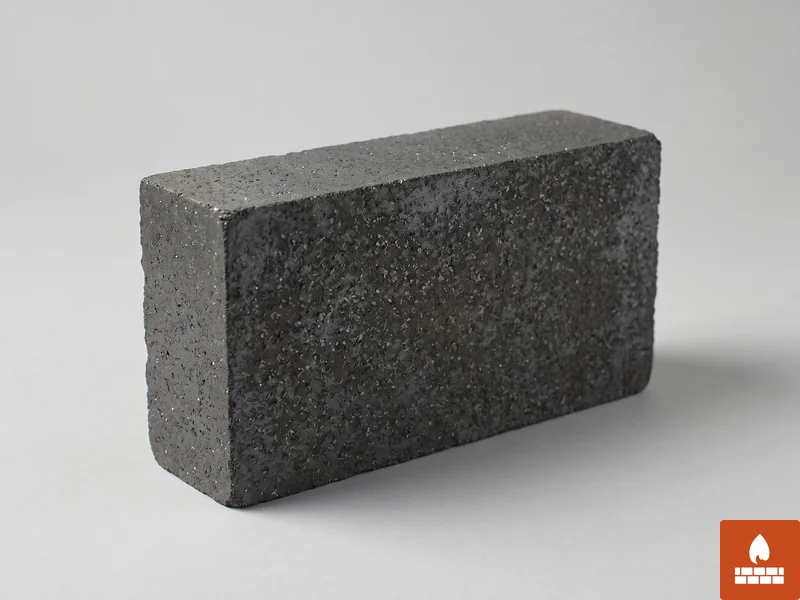
MgO 76 – 82% · C 10 – 18% · Max 1800 °C
Magnesia-Carbon (MgO-C) Refractory Bricks
Supplier and exporter from Rajkot, India. Resin-bonded MgO-graphite refractory bricks — the slag-line standard for BOF converters, EAF hot-spots, steel ladles and AOD/VOD vessels.
- MgO76 – 82%
- Graphite (C)10 – 18%
- Bulk density≥ 2.95 g/cm³
- HMOR @ 1400 °C≥ 6 MPa
- Apparent porosity≤ 4%
- Max temp1800 °C
About this product
What magnesia-carbon refractory bricks are — and where they fit
Magnesia-carbon (MgO-C) refractory bricks are basic refractory products manufactured from sintered or fused magnesia aggregate (76 – 82% MgO) combined with 10 – 18% flake graphite and 1 – 5% metallic antioxidants (Al, Si, B₄C). The mix is bonded with phenolic resin rather than ceramic-fired — the result is a carbon-bonded matrix with very low apparent porosity (≤ 4%) and exceptional resistance to basic slag penetration. Hot modulus of rupture at 1400 °C is typically ≥ 6 MPa, several times the value of fired magnesia.
What is a MgO-C brick? A magnesia-carbon brick is the basic refractory grade engineered specifically for slag-line service. The graphite phase does two essential things: it lowers wetting by liquid slag (slag pushes off the graphite rather than penetrating the brick), and it improves thermal-shock resistance by acting as a flexible, high-conductivity network around the MgO grains. Without antioxidants the graphite would burn away above ~600 °C and the brick would lose both effects; with them, the Al/Si/B₄C system forms protective oxide layers that defend the carbon network up to working temperature.
Compared to pure magnesia bricks, MgO-C costs more and is sensitive to oxidising atmospheres, but lasts significantly longer at the slag-line. Compared to dolomite refractory bricks, MgO-C is more expensive and less suited to AOD high-Cr slag — but is the universal choice for carbon-steel BOF and EAF service. See steel & foundry industry for the application context.
firebrickssource.com supplies MgO-C in standard 230 × 114 × 65 mm and in large-format BOF/EAF shapes (key, taper, slag-line) to drawing. The graphite content, antioxidant package and aggregate type (sintered vs fused magnesia) are tunable to the customer's slag chemistry and campaign target. Bricks ship with moisture-barrier film on heat-treated pallets — MgO-C is hygroscopic and must stay dry. firebrickssource.com is a refractory bricks manufacturer-cum-merchant exporter from Rajkot, Gujarat, India.
Technical specifications
Full property data — magnesia-carbon bricks
| Property | Value | Test method |
|---|---|---|
| MgO content | 76 – 82 % | IS 1528-7 |
| Graphite (C) content | 10 – 18 % | ASTM C831 |
| Antioxidant addition | 1 – 5 % (Al / Si / B₄C) | Mfg formulation |
| Apparent porosity | ≤ 4 % | ASTM C20 / IS 1528-8 |
| Bulk density | ≥ 2.95 g/cm³ | IS 1528-12 |
| Cold crushing strength (CCS) | ≥ 40 MPa | IS 1528-4 / ASTM C133 |
| Hot modulus of rupture (1400 °C) | ≥ 6 MPa | ASTM C583 |
| Bond | Phenolic resin (carbon-bond) | — |
| Max service temperature | 1800 °C | — |
| Standard size | 230 × 114 × 65 mm | — |
| Custom sizes | BOF / EAF key, taper, slag-line shapes — to drawing | — |
| Packaging | Shrink-wrap + moisture barrier on heat-treated pallets | — |
*Typical certified values — actual batch values issued on the per-shipment test certificate. Values aligned with IS 1528 / ASTM C-series / EN 993 test methods.
Applications
Where to use magnesia-carbon refractory bricks
- BOF converter slag-line and trunnion zone
- EAF hot-spots (3 / 6 / 9 o'clock positions)
- EAF tap-pad and tap-hole area
- Steel ladle slag-line (carbon & low-alloy steel)
- Steel ladle barrel hot-face
- AOD / VOD vessel slag-line and barrel
- Stainless-steel converter slag-line
- Torpedo ladle slag-line (hot-metal transport)
- Tundish impact-pad and turbo-stopper
- Reladling station tundish slag-line
Datasheet
Download technical datasheet
PDF with all certified properties, graphite/antioxidant variants, dimensional tolerances and applicable test methods. Use this for tender attachments.
Download MgO-C datasheet (PDF)Quote request
Get MgO-C quote in 24 hours
Vessel, slag chemistry, campaign-life target, brick mix, Incoterm. Quote, datasheet and lead time come back the same business day or the next.
Frequently asked
MgO-C bricks — questions buyers ask
What is a magnesia-carbon (MgO-C) brick?
A magnesia-carbon brick is a basic refractory brick made from sintered or fused magnesia aggregate (76 – 82% MgO) and 10 – 18% flake graphite, bonded with phenolic resin to form a carbon-bonded matrix and dosed with metallic antioxidants (Al, Si, B₄C). Compared to fired magnesia, MgO-C offers far superior slag-line and thermal-shock performance.
Where are MgO-C bricks used?
Typical applications include BOF converter slag-line, EAF hot-spots, EAF tap-pad, steel ladle slag-line, AOD and VOD vessels, and stainless-steel converter slag-line — anywhere basic slag attack and thermal-shock are the dominant failure modes.
Why does MgO-C contain antioxidants?
Graphite oxidises rapidly above ~600 °C in air, which would deplete the carbon network and destroy the brick. Antioxidants (typically aluminium, silicon and boron carbide at 1 – 5%) react preferentially with oxygen at brick-face temperature, forming dense oxide layers that protect the underlying graphite and extend campaign life.
What graphite content should I specify?
Higher graphite (15 – 18%) gives better slag-resistance and thermal-shock — used for severe BOF and EAF slag-line. Lower graphite (10 – 12%) gives better mechanical strength and less heat-loss — used for less-aggressive ladle barrel and back-up positions. Specify graphite based on the failure mode you want to defend against.
What is the difference between MgO-C and pure magnesia bricks?
Pure magnesia bricks are fired (ceramic-bonded) and contain no graphite. MgO-C bricks are resin-bonded (carbon-bonded) and contain 10 – 18% graphite. MgO-C delivers dramatically better slag-line and thermal-shock performance, at the cost of higher unit price and graphite oxidation sensitivity.
What is the typical MOQ and packaging?
Standard MOQ is 10 – 20 MT, normally tied to a vessel campaign. Bricks are shrink-wrapped, edge-protected, on heat-treated wooden pallets, with moisture-barrier film (MgO-C is hygroscopic). One 20-foot container typically carries 22 – 25 MT.
Do you provide samples and test certificates?
Yes. Samples can be dispatched on request — normally chargeable plus courier. Every production batch is tested for MgO and graphite content, bulk density, apparent porosity, CCS and HMOR (hot modulus of rupture); a test certificate ships with each consignment.
Related products
Buyers of MgO-C also viewed
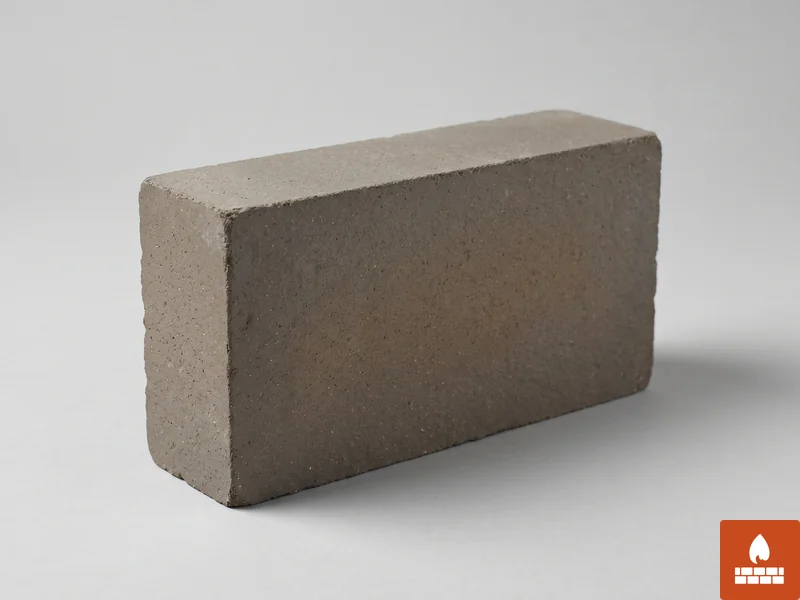
Magnesia Bricks
Fired pure magnesia — BOF back-up, EAF wall, NF reverberatory.
MgO ≥ 90% · 1800 °C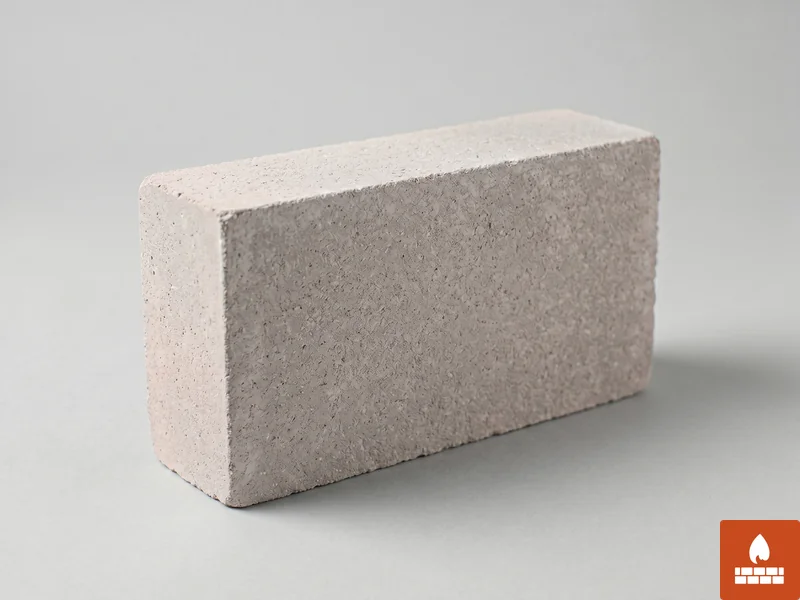
Dolomite Refractory Bricks
AOD/VOD vessels, cement transition zone.
CaO 35 – 58% · MgO 35 – 40%
Steel & Foundry
Industry hub — BOF, EAF, ladle, tundish refractory selection.
Primary application