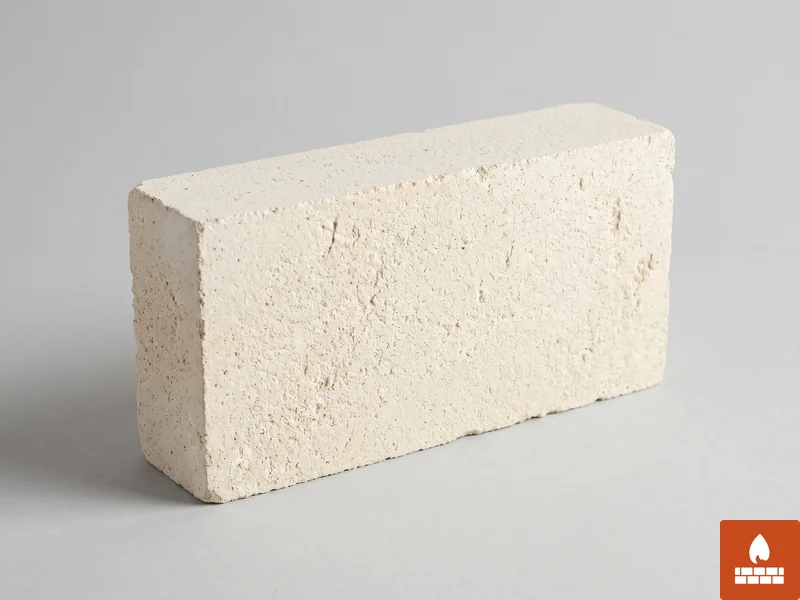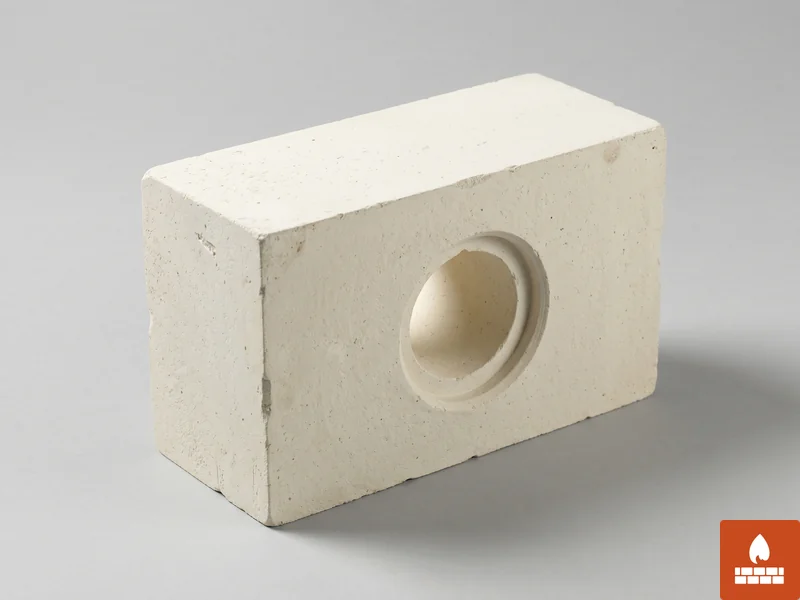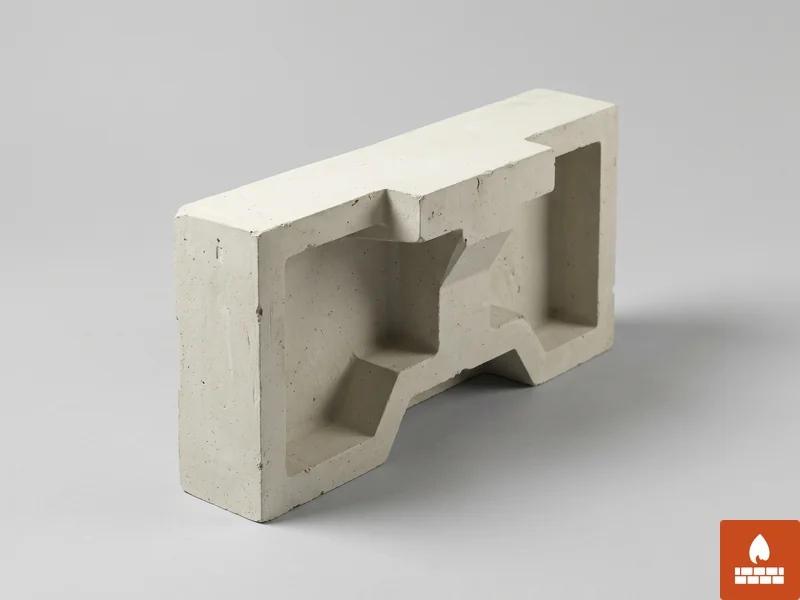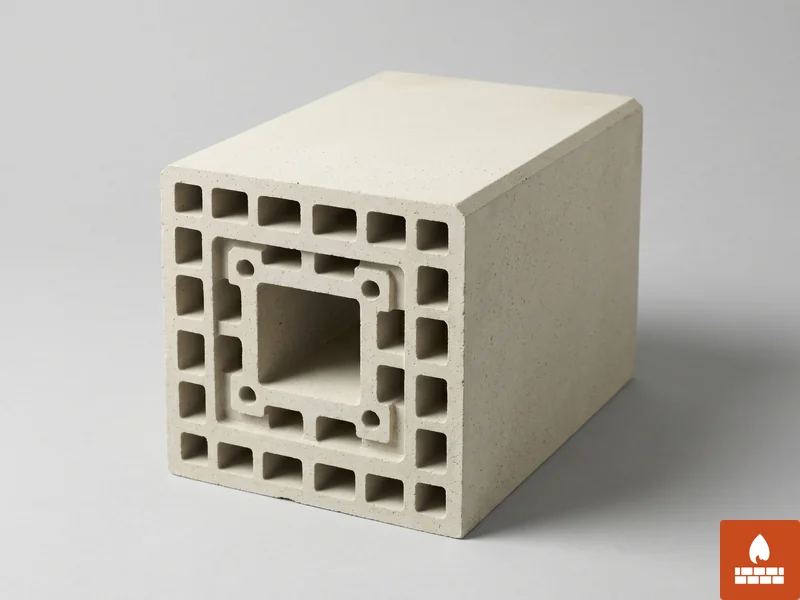
Checker · Cruciform / Octagonal / Basket-weave
Checker Refractory Bricks for Regenerators
Heat-exchange refractory shapes for regenerator chambers — glass furnaces, blast-furnace hot-blast stoves, gas-fired ceramic kilns and sulphur-recovery thermal reactors. Engineered for high surface-area-to-volume ratio.
- ShapesCruciform / Oct / B-weave
- Thickness40 – 75 mm
- Base optionsSilica / Mullite / MgO / HA
- Max temp1500 – 1700 °C
- PropertyHigh SA/V ratio
- SizingPer drawing
About this product
What checker refractory bricks are — and where they fit
Checker refractory bricks are special-shape refractory products engineered for heat-exchange duty inside thermal-regenerator chambers. firebrickssource.com — Rajkot, Gujarat, India — supplies the full range of checker shapes within the special shapes refractory category, exported to glass-tank, blast-furnace and ceramic-kiln constructors worldwide.
A regenerator works on a simple thermal-cycling principle: hot exhaust gases pass through a packed bed of refractory shapes, heating the refractory by convection and radiation. After a few minutes the gas flow reverses, and cold combustion air passes through the same heated bed — picking up heat from the refractory before entering the furnace. This recovers between 30% and 60% of the exhaust enthalpy and is the single largest energy-efficiency feature of glass tanks and blast-furnace stoves. The checker pack therefore needs to maximise gas–refractory contact area (high surface-area-to-volume ratio) while keeping the gas pressure drop within practical limits.
Standard checker shapes are cruciform (cross-shaped, very high SA/V), octagonal, basket-weave (interleaved stack), and ribbed/finned. Thickness ranges from 40 mm in the hot zone (fast thermal response, highest efficiency) up to 75 mm in the cold zone (mechanical robustness against dust and slag deposition). Chemistry is selected by zone temperature and chemistry: silica checker at the hot top of glass-tank regenerators, mullite or high-alumina checker in the middle zones, and magnesia checker where basic-slag chemistry dominates. Magnesia-chrome and AZS-bonded checker are also produced for the most aggressive zones.
firebrickssource.com supplies complete checker chamber inventories — typically 5 – 50 tonnes per regenerator depending on tank size — with laying drawings and pack lists matched to the regenerator design. See related special shapes arch & wedge bricks, burner blocks, and the full special shapes category. For base-grade chemistry detail see high-alumina bricks and basic refractories.
Technical specifications
Checker bricks — shapes and base chemistry options
| Shape | Base chemistry | Typical thickness | Regenerator zone |
|---|---|---|---|
| Cruciform | Silica / Mullite | 40 – 50 mm | Glass-tank top zone (hot) |
| Octagonal | Mullite / HA | 50 – 65 mm | Middle zones, blast-furnace stove |
| Basket-weave | HA / Magnesia | 50 – 75 mm | Glass-tank middle / cold zone |
| Ribbed / finned | HA / SiC | 50 – 65 mm | Specialty heat-recovery |
| Magnesia checker | MgO ≥ 92% | 65 – 75 mm | Basic-slag environments |
| AZS-bonded checker | AZS / mullite | 40 – 65 mm | Aggressive glass-tank top |
| Max service °C | 1500 – 1700 depending on base chemistry | ||
| Critical property | Surface-area-to-volume ratio — for heat-exchange efficiency | ||
*Typical certified values — actual batch values issued on the per-shipment test certificate. Values aligned with IS 1528 / ASTM C-series / EN 993 test methods.*
Applications
Where to use checker refractory bricks
- Glass-tank regenerator (top, middle, cold zones)
- Blast-furnace hot-blast stove
- Gas-fired ceramic-kiln regenerator
- Sulphur-recovery thermal reactor
- Refinery thermal-cracker regenerator
- Container-glass tank stove
- Float-glass tank regenerator
- Fibre-glass tank regenerator
- Specialty heat-recovery systems
- Sulphuric acid plant heat exchanger
Datasheet
Download technical datasheet
PDF with checker shape catalogue, base-chemistry options, thickness ranges and dimensional tolerances. Includes regenerator-zone selection guidance.
Download CHK datasheet (PDF)Quote request
Engineered quote on checker pack
Send the regenerator drawing, zone-by-zone chemistry, total tonnage and Incoterm. Checker packs are project-priced with engineering support.
Frequently asked
Checker — questions buyers ask
What are checker bricks for?
Checker bricks fill the regenerator chambers of thermal-cycling industrial furnaces — glass tanks, blast-furnace hot-blast stoves, gas-fired ceramic kilns and sulphur-recovery thermal reactors. During the firing cycle, hot exhaust gases pass through the checker pack and heat the refractory. During the gas-flow reversal, cold combustion air passes through the heated checker pack and is preheated — recovering exhaust heat and dramatically reducing fuel consumption.
What shapes of checker brick are available?
Common shapes include cruciform (cross-shaped), octagonal, basket-weave and ribbed/finned configurations. The geometry is engineered for high surface-area-to-volume ratio (heat-exchange efficiency) while still allowing the gas pressure-drop to remain practical. Cruciform and basket-weave dominate in glass-tank regenerators; tall cylindrical or hexagonal forms are common in blast-furnace stoves.
What chemistries are available?
Silica checker is used at the top (hot) zone of a glass-tank regenerator. Mullite and high-alumina checker cover the middle zones where moderate-temperature acid-resistant duty is needed. Magnesia checker is used in basic-slag environments. The full chemistry depends on the gas-side dust composition, sulphur loading and operating temperature.
What is the thickness range?
Standard thickness is 40 – 75 mm. Thicker checker provides more thermal mass per layer at the cost of slower thermal response; thinner checker gives faster response and higher efficiency at the cost of mechanical robustness. Most modern glass-tank regenerators specify cruciform 40 mm at the hot zone and stepped-up thickness lower down.
Why is surface-area-to-volume ratio important?
Regenerator heat-exchange efficiency is directly proportional to the wetted surface area available for gas–refractory contact. Higher surface-area-to-volume ratio means more area for heat transfer per unit volume of refractory, so the regenerator either captures more heat in the same volume or shrinks to a smaller volume for the same duty. Cruciform and basket-weave shapes optimise this ratio.
How are checker bricks supplied?
Checker bricks are project-priced — sent as a complete chamber inventory (typically 5 – 50 tonnes per regenerator depending on tank size). We supply with the laying drawing and pack-list to match the regenerator's design.
Do you provide samples and test certificates?
Yes. Samples can be dispatched on request — normally chargeable plus courier. Every production batch is tested per the base-chemistry specification (Al₂O₃ / SiO₂ / MgO, CCS, RUL, porosity); a test certificate ships with each consignment.