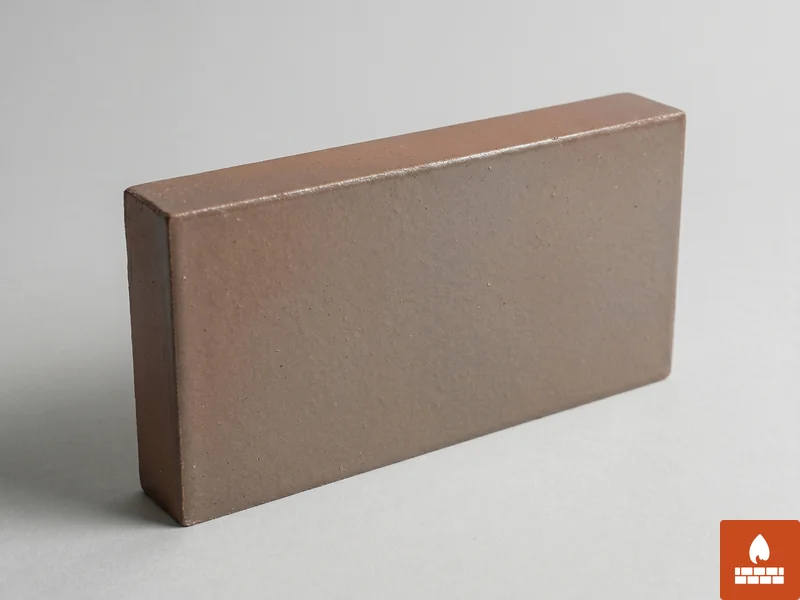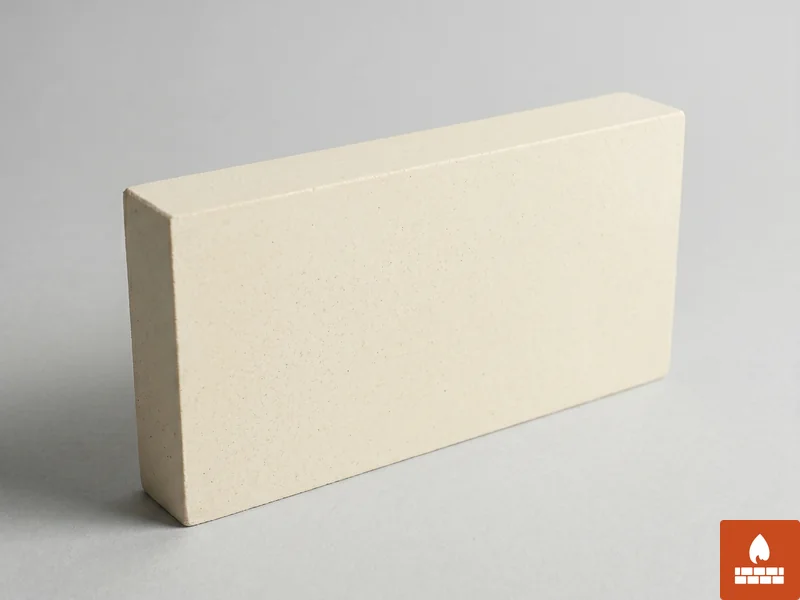
Zircon · ZrSiO₄ ≥ 60% · 1750 °C
Zircon Refractory Bricks (ZrSiO₄)
Supplier and exporter from Rajkot, India. Specialty refractory bricks for glass furnace flux line, throat and superstructure, steel tundish nozzles and foundry pouring sleeves — high-temperature acidic chemistry, excellent alkali resistance.
- ZrSiO₄≥ 60%
- ZrO₂≥ 33%
- Bulk density≥ 3.20 g/cm³
- CCS≥ 60 MPa
- RUL T₀.₅≥ 1650 °C
- Max temp1750 °C
About this product
What zircon refractory bricks are — and where they fit
Zircon refractory bricks are dense fired refractory products manufactured from zircon sand (ZrSiO₄), a naturally occurring zirconium silicate mineral. Typical chemistry is ZrSiO₄ ≥ 60%, ZrO₂ ≥ 33% and SiO₂ ≈ 33%. firebrickssource.com — manufacturer-cum-merchant exporter from Rajkot, Gujarat, India — supplies zircon bricks within the broader refractory range for severe-service zones in glass, steel and foundry industries.
Zircon refractory bricks are the standard pressed-and-sintered choice for glass-tank flux lines, glass throats and superstructure, steel tundish nozzles and foundry pouring sleeves. The acidic ZrSiO₄ chemistry is highly resistant to acidic glass melts, gives excellent resistance to alkali attack at high temperature, and tolerates the thermal cycling that destroys silica or fireclay refractories in the same zone. With bulk density ≥ 3.20 g/cm³, CCS ≥ 60 MPa, RUL T₀.₅ ≥ 1650 °C and a maximum service temperature of around 1750 °C, the grade sits between standard high-alumina and the premium fused-cast AZS family.
Zircon bricks are typically specified where the service temperature is too high for high-silica acid-resistant bricks but the project budget does not justify fused-cast AZS. Common positions include the back-up flux line behind primary AZS, the bottom paving of small glass tanks, the steel tundish slide-gate nozzle environment and small-batch foundry tools. The grade is also used as a back-up to fused-cast AZS bricks in glass-tank construction.
firebrickssource.com supplies zircon bricks in standard rectangular sizes plus custom shapes for tundish nozzles and glass-tank throat blocks. Adjacent grades in the range include high-silica acid-resistant bricks (lower temperature, denser acid service) and silicon-carbide bricks (where abrasion and thermal conductivity are the deciding factors). For the full category see acid-resistant bricks or the premium specialty refractories family.
Technical specifications
Full property data — zircon refractory bricks
| Property | Value | Test method |
|---|---|---|
| ZrSiO₄ content | ≥ 60 % | IS 1528-7 / XRF |
| ZrO₂ content | ≥ 33 % | IS 1528-7 / XRF |
| SiO₂ content | ≈ 33 % | IS 1528-7 / XRF |
| Apparent porosity | ≤ 20 % | IS 1528-8 / ASTM C20 |
| Bulk density | ≥ 3.20 g/cm³ | IS 1528-12 |
| Cold crushing strength (CCS) | ≥ 60 MPa | IS 1528-4 / ASTM C133 |
| Refractoriness under load (RUL T₀.₅) | ≥ 1650 °C | IS 1528-2 |
| Maximum service temperature | 1750 °C | — |
| Standard size | 230 × 114 × 65 mm | — |
| Custom shapes | Tundish nozzle, sleeve, throat block, pouring spout | — |
*Typical certified values — actual batch values issued on the per-shipment test certificate. Values aligned with IS 1528 / ASTM C-series / EN 993 test methods.*
Applications
Where to use zircon refractory bricks
- Glass furnace flux line (back-up to AZS)
- Glass tank throat & bottom paving
- Glass tank superstructure (acid-resistant)
- Steel tundish nozzle & sleeve
- Foundry pouring sleeves
- Slide-gate plate refractories
- Glass-fibre forming bushings (refractory back-up)
- Continuous-casting submerged-entry nozzle (SEN)
- Specialty industrial furnace linings
- Investment-casting tool refractory
Datasheet
Download technical datasheet
PDF with all certified properties, dimensional tolerances and applicable IS / ASTM test methods. Use this for tender attachments and procurement files.
Download zircon datasheet (PDF)Quote request
Get zircon brick quote in 24 hours
Send your zone (flux line, throat, nozzle), target chemistry, quantity and Incoterm. Quote, datasheet and lead time come back the same business day or the next.
Frequently asked
Zircon — questions buyers ask
What are zircon refractory bricks made of?
Zircon refractory bricks are made primarily from zircon sand (ZrSiO₄), a naturally occurring mineral of zirconium silicate. Typical chemistry is ZrSiO₄ ≥ 60%, ZrO₂ ≥ 33% and SiO₂ ≈ 33%, with binders and matrix additions. The result is a dense, high-temperature refractory with strong resistance to glass melts and acidic slags.
What is the maximum service temperature of zircon bricks?
Zircon bricks have a refractoriness under load (RUL T₀.₅) of ≥ 1650 °C and a maximum service temperature of around 1750 °C. Performance at the upper limit depends on the slag chemistry and thermal-cycling profile.
Where are zircon refractory bricks used?
Zircon bricks are widely used in glass furnace flux lines, glass tank throats and superstructure, steel tundish nozzles, foundry pouring sleeves and other zones where high-temperature service combines with acidic melt chemistry and resistance to alkali attack.
How do zircon bricks compare to fused-cast AZS?
Zircon bricks are sintered/pressed and lower-cost, used in back-up flux-line positions and in non-critical glass-furnace zones. Fused-cast AZS bricks are electric-arc melted and cast, with near-zero porosity and dramatically higher corrosion resistance — used in primary glass-tank flux lines and throats. For severe glass-melt service the AZS route is preferred; zircon is the lower-cost option for less aggressive zones.
What is the typical bulk density?
Bulk density for zircon refractory bricks is ≥ 3.20 g/cm³. The high density reflects the high atomic weight of zirconium and is one of the reasons zircon bricks deliver such strong glass-corrosion resistance.
What is the typical MOQ for zircon bricks?
Zircon is a specialty grade with a typical MOQ of 2 – 5 MT for stocked sizes, or per-project for custom shapes. Lead time is longer than for fireclay or high-alumina due to the specialty raw material.
Do you provide samples and test certificates?
Yes. Samples can be dispatched on request — normally chargeable plus courier. Every production batch is tested for ZrO₂ content, apparent porosity, bulk density and RUL; a test certificate ships with each consignment.
Related products