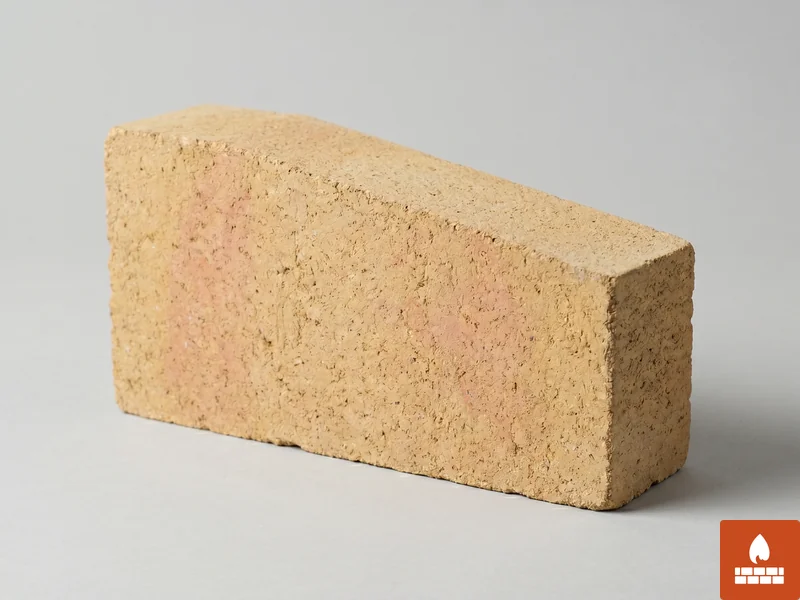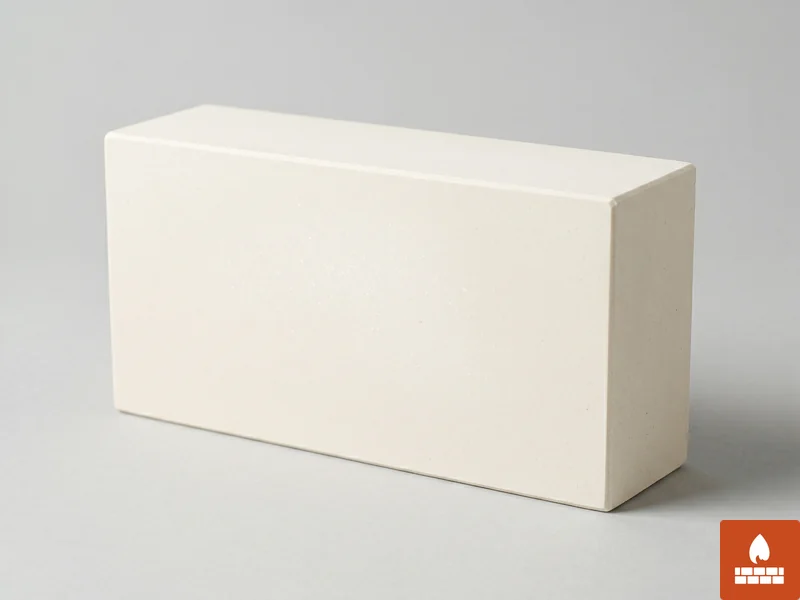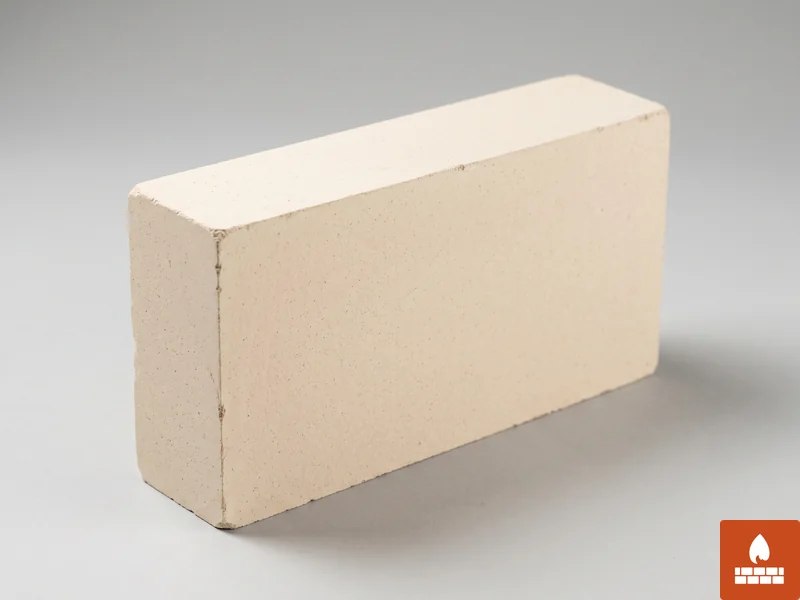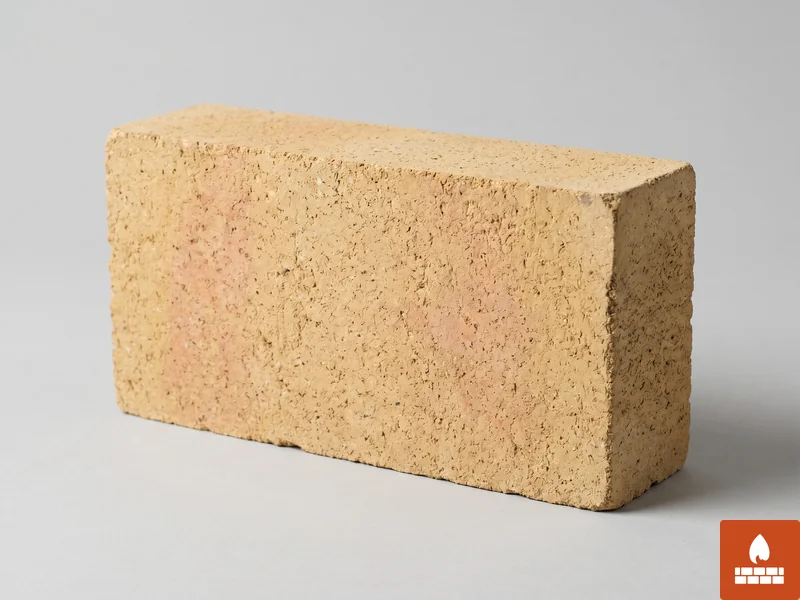
DFC · Al₂O₃ 30 – 46% · 1500 °C
Dense Fireclay Refractory Bricks
Supplier and exporter from Rajkot, India. The workhorse general-purpose refractory — competitive cost, reliable service, broadly specified across cement, ceramics, boilers and chimneys.
- Al₂O₃30 – 46%
- Max temp1500 °C
- Bulk density≥ 2.0 g/cm³
- CCS≥ 30 MPa
- Standard size230 × 114 × 65 mm
- MOQ5 – 10 MT
About this product
What dense fireclay bricks are — and where they fit
Dense fireclay refractory bricks are fired clay-based refractories with 30 – 46% Al₂O₃ (aluminium oxide) and 50 – 65% SiO₂, manufactured from selected fireclay and chamotte aggregates pressed to a dense ceramic body. They are the starting point of the entire refractory ladder — the most-specified, most-shipped, and most-widely-understood grade in international procurement.
What is a dense fireclay brick? It is a fired silico-aluminous refractory in which the dominant phases are mullite and glassy silica, with a low porosity (≤ 24%) and adequate cold crushing strength (≥ 30 MPa) for stacked-arch loads. The grade is used wherever service temperatures stay below 1500 °C, slag chemistry is mild to neutral, and procurement teams need a reliable, economical lining without the cost of high-alumina or specialty refractories.
Compared to 45% high-alumina bricks, the dense fireclay grade gives up roughly 100 – 150 °C of peak temperature and some slag resistance — but at materially lower per-tonne cost, which keeps it the default specification for chimneys, boiler back-up, lime kilns, ceramic tunnel kilns and ladle outer linings. Compared to insulating fire bricks (IFB), dense fireclay has the opposite role: it is the load-bearing dense hot-face or back-up layer, while IFB carries the insulation duty behind it.
firebrickssource.com — Agochar Tech LLP — manufactures and exports dense fireclay refractory bricks from Rajkot, Gujarat, India in the standard 230 × 114 × 65 mm size, plus arch and wedge variants, taper bricks and custom precast shapes to drawing. Standard chemistry is IS 1528 aligned and PCE values are reported on the Orton scale; minor adjustments to the SiO₂ / Al₂O₃ ratio or chamotte grading are possible on indent orders. The grade is regularly shipped to cement, steel and ceramic plants across the Middle East, Africa, Southeast Asia and Latin America.
Technical specifications
Full property data — dense fireclay bricks
| Property | Value | Test method |
|---|---|---|
| Al₂O₃ content | 30 – 46 % | IS 1528-7 |
| SiO₂ content | 50 – 65 % | IS 1528-7 |
| Fe₂O₃ content | ≤ 2.5 % | IS 1528-7 |
| Apparent porosity | ≤ 24 % | IS 1528-8 / ASTM C20 |
| Bulk density | ≥ 2.0 g/cm³ | IS 1528-12 |
| Cold crushing strength (CCS) | ≥ 30 MPa | IS 1528-4 / ASTM C133 |
| Refractoriness under load (RUL T₀.₅) | ≥ 1350 °C | IS 1528-2 / EN 993-8 |
| Permanent linear change (PLC, 1400°C × 2h) | ± 1 % | IS 1528-6 |
| Pyrometric cone equivalent (PCE) | ≥ 30 (Orton) | IS 1528-1 |
| Maximum service temperature | 1500 °C | — |
| Standard size | 230 × 114 × 65 mm | IS 1528 nomenclature |
| Custom sizes | Available on request — arch, wedge, taper, precast | — |
| Typical certified values — actual batch values issued on the per-shipment test certificate. Values aligned with IS 1528 / ASTM C-series / EN 993 test methods. | ||
Applications
Where to use dense fireclay bricks
- Industrial chimney linings
- Boiler back-up & combustion chambers
- Lime kiln (preheater & calcining zone)
- Ceramic tunnel and shuttle kilns
- Ladle outer / back-up linings (steel)
- Soaking pits and reheating furnace back-up
- Cement plant preheater back-up
- Glass-furnace regenerator cold-end
- Sulphur recovery & incinerator linings
- General-purpose furnace masonry
Datasheet
Download technical datasheet
PDF with all certified properties, dimensional tolerances and applicable IS / ASTM / EN test methods. Use this for tender attachments and procurement files.
Download DFC datasheet (PDF)Quote request
Get DFC quote in 24 hours
Quantity, target chemistry, Incoterm — that's all we need. Quote, datasheet and lead time come back the same business day or the next.
Frequently asked
Dense fireclay — questions buyers ask
What is a dense fireclay refractory brick?
Dense fireclay bricks are fired clay-based refractory products with 30 – 46% Al₂O₃ and 50 – 65% SiO₂. They are the workhorse general-purpose refractory — used wherever service temperatures stay below 1500 °C and slag chemistry is mild.
What is the maximum service temperature for dense fireclay bricks?
Dense fireclay bricks have a refractoriness under load (RUL T₀.₅) of approximately 1350 °C and a maximum service temperature of about 1500 °C, depending on the specific application, load and thermal cycling.
Where are dense fireclay bricks used?
Typical applications include industrial chimneys, boiler back-up linings, lime kilns, ceramic kilns, soaking pits and the outer (back-up) linings of steel ladles.
What is the standard size of dense fireclay bricks?
The standard rectangular size is 230 × 114 × 65 mm per IS 1528 nomenclature. Custom sizes, arch and wedge shapes, taper bricks and precast components are available on request — send a drawing or specification.
What is the difference between dense fireclay and high-alumina bricks?
Dense fireclay bricks contain 30 – 46% Al₂O₃ and are rated up to about 1500 °C. High-alumina bricks start at 45% Al₂O₃ and extend to 90% — they offer higher peak temperature, better load-bearing capacity and improved slag resistance, at materially higher cost.
What Incoterms are offered for export shipments?
We typically quote FOB Mundra or FOB Kandla. CIF, CFR and EXW are available on request. Sea-freight rates are confirmed at the time of booking.
Do you provide samples and test certificates?
Yes. Samples can be dispatched on request — normally chargeable plus courier. Every production batch is tested for apparent porosity, bulk density, cold crushing strength and refractoriness; a test certificate ships with each consignment.
Related products