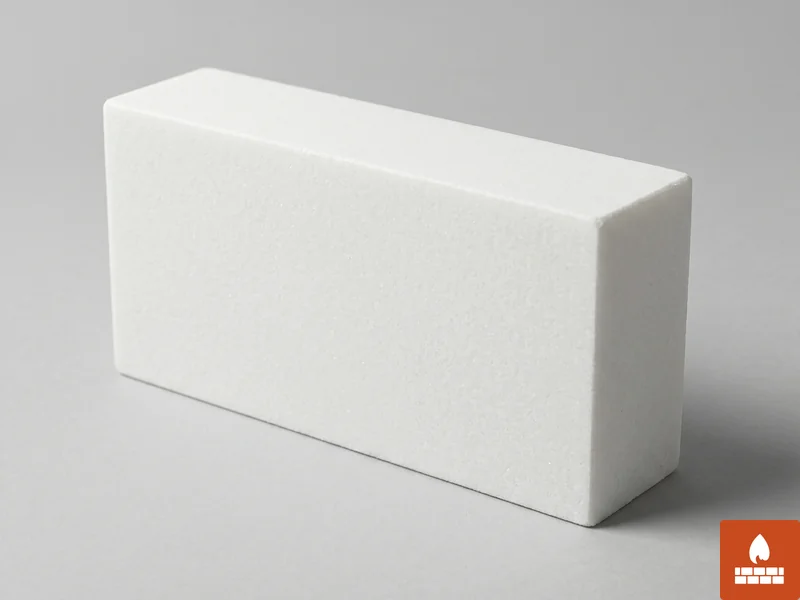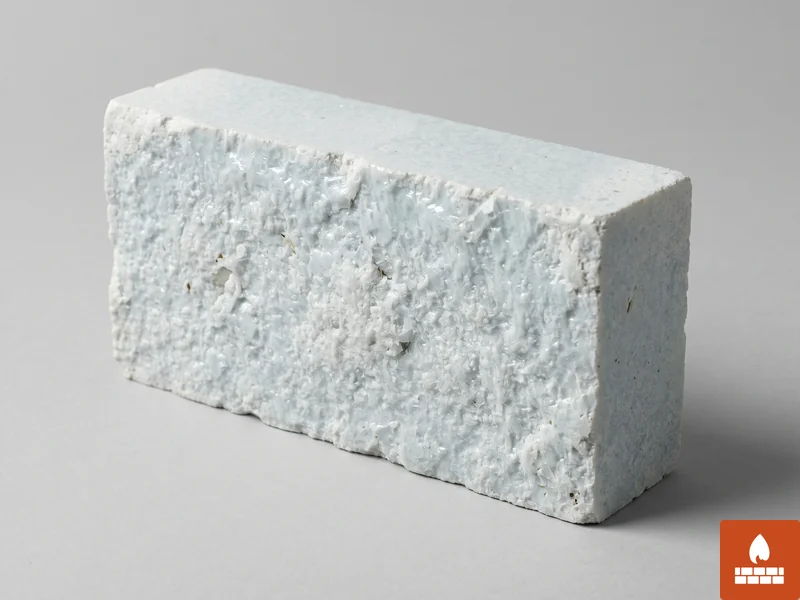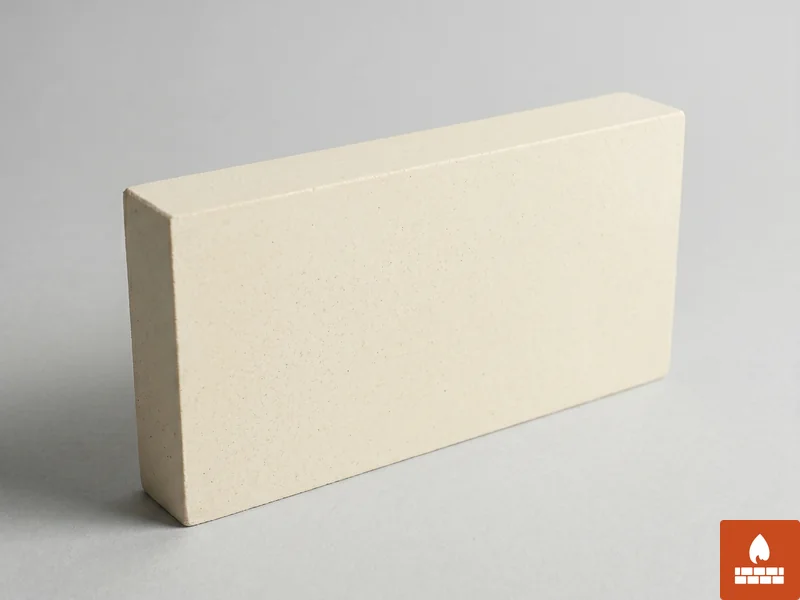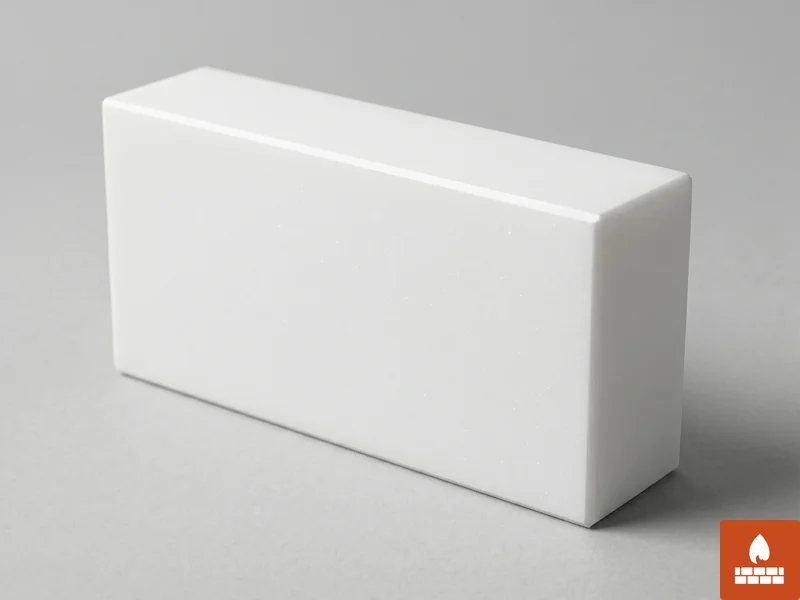
ZrO₂-95 · Y₂O₃ / MgO stabilised · 2200 °C
Zirconia (ZrO₂) Refractory Bricks
Ultra-high-temperature refractory bricks of stabilised zirconia — induction furnace linings, plasma reactors, nuclear glass vitrification refractory and aerospace test-rig hot-section refractory.
- ZrO₂≥ 95%
- SiO₂≤ 1%
- App. porosity≤ 18%
- Bulk density≥ 5.0 g/cm³
- CCS≥ 200 MPa
- Max temp2200 °C
About this product
What zirconia refractory bricks are — and where they fit
Zirconia refractory bricks are sintered or isostatically pressed refractory products built on stabilised ZrO₂ ≥ 95%, with yttria (Y₂O₃) or magnesia (MgO) added at 3 – 10 mol% to lock the crystal structure across the service temperature range. firebrickssource.com — Rajkot, Gujarat, India — supplies zirconia bricks within the specialty refractories range for the most demanding ultra-high-temperature applications worldwide.
Zirconia refractory bricks are the standard choice for service environments above 1800 °C where every other oxide refractory fails. With a maximum service temperature of 2200 °C, bulk density ≥ 5.0 g/cm³, CCS ≥ 200 MPa and excellent chemical inertness in oxidising and inert atmospheres, the grade serves the smallest refractory market by volume but the most demanding by specification. Stabilisation is critical: pure ZrO₂ undergoes a destructive monoclinic-to-tetragonal phase transition around 1170 °C, so stabilisers are added to keep the crystal locked in the cubic or tetragonal form. Fully stabilised zirconia (FSZ) and partially stabilised zirconia (PSZ) variants are produced — PSZ has higher thermal-shock resistance, FSZ has higher creep resistance.
Typical applications are induction furnace linings (where the high electrical resistivity of zirconia is also useful), plasma reactor walls (e.g. in waste destruction and specialty material processing), nuclear waste glass vitrification refractory where chemical inertness to highly corrosive borosilicate melt is essential, and aerospace re-entry vehicle thermal-protection test rigs. Zirconia is also the basis for solid oxide fuel cell (SOFC) electrolyte and oxygen-sensor probes, though those are functional ceramics rather than structural refractory.
firebrickssource.com supplies zirconia bricks in standard sizes and custom-machined shapes including crucibles, tubes and rings for laboratory and pilot-plant work. See the full specialty refractories category; adjacent options for high-T service are premium corundum bricks and fused-cast AZS bricks. For lower-purity zirconium-bearing refractory bricks see zircon bricks in the acid-resistant category. For very-high-conductivity reducing-atmosphere options see carbon & graphite blocks.
Technical specifications
Full property data — zirconia refractory bricks
| Property | Value | Test method |
|---|---|---|
| ZrO₂ content | ≥ 95 % | XRF |
| SiO₂ content | ≤ 1 % | XRF |
| Stabiliser | Y₂O₃ 3 – 8 mol% or MgO 5 – 10 mol% | XRF |
| Apparent porosity | ≤ 18 % | EN 993-1 |
| Bulk density | ≥ 5.0 g/cm³ | IS 1528-12 |
| Cold crushing strength (CCS) | ≥ 200 MPa | ASTM C133 |
| Maximum service temperature | 2200 °C | — |
| Variants | FSZ (fully stabilised), PSZ (partially stabilised) | — |
| Atmosphere | Oxidising / inert preferred | — |
| Sizing | Standard sizes plus crucibles, tubes, rings to drawing | — |
*Typical certified values — actual batch values issued on the per-shipment test certificate. Values aligned with IS 1528 / ASTM C-series / EN 993 test methods.*
Applications
Where to use zirconia refractory bricks
- Induction furnace linings (high resistivity benefit)
- Plasma reactor walls & nozzles
- Nuclear waste glass vitrification refractory
- Aerospace test rigs & re-entry trials
- Single-crystal growth furnaces
- Specialty kiln furniture > 1800 °C
- Continuous casting submerged-entry nozzle
- Laboratory crucibles & tubes
- Solid oxide fuel cell pilot-plant refractory
- Ultra-high-temperature sintering kilns
Datasheet
Download technical datasheet
PDF with full zirconia property data, FSZ vs PSZ comparison, stabilisation chemistry and dimensional tolerances. Use for tender attachments and procurement files.
Download ZrO₂-95 datasheet (PDF)Quote request
Engineered quote on zirconia
Send the application zone, target ZrO₂ purity, stabiliser preference and Incoterm. Zirconia is project-priced with engineering support.
Frequently asked
ZrO₂-95 — questions buyers ask
What does "stabilised" zirconia mean?
Pure ZrO₂ undergoes a destructive monoclinic-to-tetragonal phase transition around 1170 °C with a 3 – 5% volume change. Stabilisers (typically yttria Y₂O₃ at 3 – 8 mol% for fully or partially stabilised zirconia, or magnesia MgO at 5 – 10 mol%) are added to lock the crystal structure in the cubic or tetragonal form across the service temperature range. Stabilised zirconia is therefore mechanically stable under thermal cycling.
What is the maximum service temperature?
Up to 2200 °C in oxidising and inert atmospheres. Zirconia is one of the highest-temperature oxide refractories commercially available — only special carbides and some pure oxides exceed it. The melting point of ZrO₂ itself is 2715 °C.
Where are zirconia refractory bricks used?
Typical applications: severe ultra-high-temperature service — induction furnace linings, plasma reactor walls, nuclear waste glassification (vitrification) plant refractory, aerospace test rigs (reentry-vehicle thermal protection trials), single-crystal growing equipment, and specialty kiln furniture for > 1800 °C ceramic firing.
Why is bulk density so high?
ZrO₂ has a theoretical density of 5.85 g/cm³ (very high atomic weight of zirconium). Bulk density ≥ 5.0 g/cm³ is normal for sintered zirconia refractory bricks, reflecting the dense atomic packing and the absence of light-element constituents. This also explains the relatively high price — the brick weight per unit volume is far higher than for any alumina-silicate refractory.
What atmospheres does zirconia tolerate?
Zirconia is stable in oxidising and inert atmospheres at all service temperatures. In strongly reducing atmospheres at very high temperature it can lose oxygen and darken — this is usually cosmetic and does not affect mechanical performance, but for critical reducing applications consult the supplier.
What sizes are available?
Standard 230 × 114 × 65 mm and 230 × 114 × 38 mm sizes are available; custom shapes are produced to drawing. Crucibles, tubes and rings can also be produced for specialty laboratory and pilot-plant applications.
Do you provide samples and test certificates?
Yes. Samples can be dispatched on request — normally chargeable plus courier. Every production batch is tested for ZrO₂ content, stabiliser level, apparent porosity, bulk density and CCS; a test certificate ships with each consignment.